
Living in Varna: pros and cons, in residents' words (2026)
Varna scores high for sea, climate and cost, but residents complain about traffic, weak buses and overbuilding. A balanced October 2026 summary.
Living in Varna is good for most people who move or stay here: the sea, a mild climate, a compact centre and a strong job market make everyday life pleasant, and Numbeo rates its quality of life as High (151.6, October 2026). The common frustrations are traffic and parking, buses that don’t always run to plan, rising rents and a construction boom that the city itself now wants to slow down. It is not as cheap as it was, but it is still affordable by Western European standards.
What do people love about living in Varna?
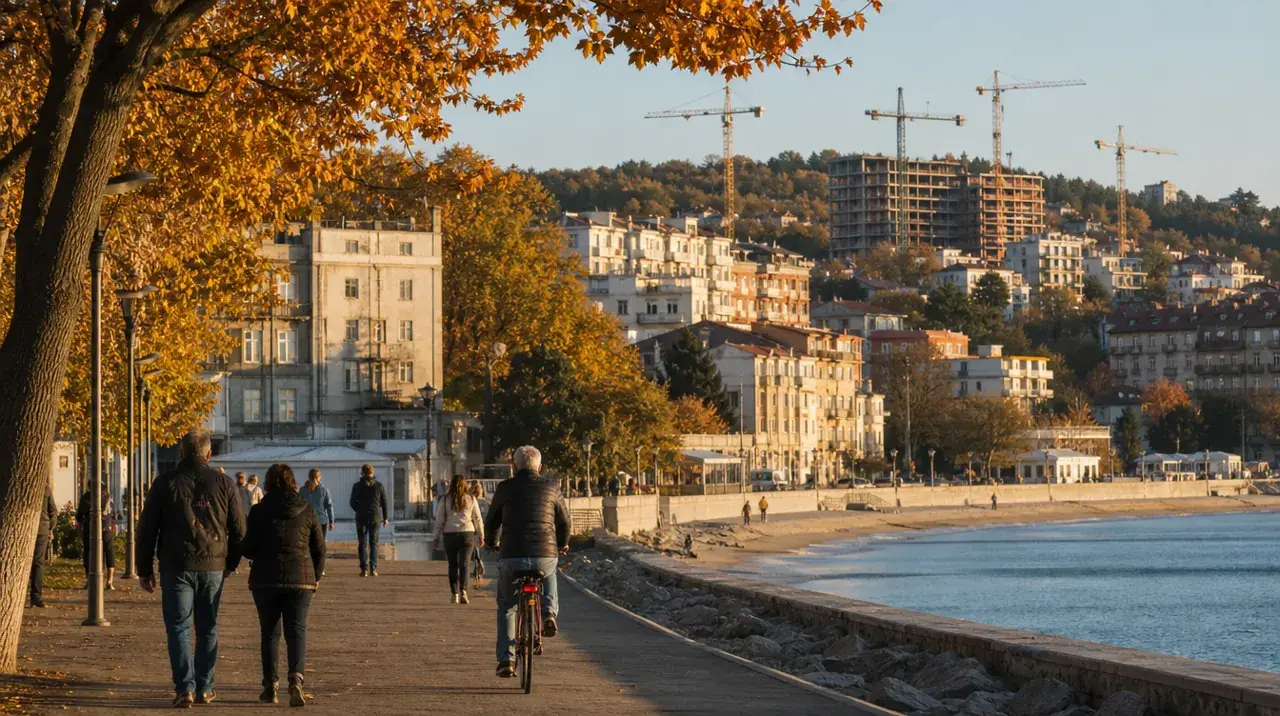
Almost every review starts with the sea. You can swim from city beaches in summer and walk the Sea Garden and the promenade all year. Residents and expats also praise how walkable the centre is, the relaxed pace outside July and August, and a cultural life that is busy for a city of its size, with festivals, theatre, opera and several universities. The Institute for Market Economics describes Varna’s cultural life as “intense” and its tourism as well developed.
What are the downsides of living in Varna?
- Getting around: buses are cheap but timetables and arrival boards are not always reliable, and Uber does not operate in Bulgaria, so you rely on licensed taxis.
- Driving culture: speeding and parking on pavements are the complaints you hear most from newcomers.
- Overbuilding: in October 2026 the mayor said investment is outpacing roads, sewers, schools and kindergartens, and the city is considering master-plan changes and even a building moratorium.
- Winter and language: winters are windy and quiet, and outside tourist areas English is less common, which makes paperwork slower.
Is Varna expensive in 2026?
It depends on your reference point. Numbeo still rates the cost of living as Low, but flat prices in Varna rose 18.1% in 2024 alone and rents near the beach are much higher than in outer districts. See our full cost of living in Varna in 2026 for euro prices.
Is it easy to find work?
On paper, yes: the Varna region had the highest employment rate in Bulgaria in 2023 and unemployment of 3.3%. Expats say it is harder without Bulgarian, and salaries are still well below Western Europe, so many newcomers work remotely. Source: IME Regional Profiles 2024.
How to decide if Varna is right for you
- Visit in November or February, not only in summer. If you like it then, you will like living here.
- Pick your neighbourhood for air and noise: residents often say the hillside districts (Levski, Tsveten, parts of Briz) get more breeze and cleaner air than the centre near the busy boulevards.
- Test a car-free week with buses, walking and taxis before buying a car.
- Read our first 30 days in Varna checklist for registration, banking and a SIM card.
A note on sources: this page paraphrases public reviews, expat guides, statistics and news. We could not check Reddit threads directly, so they are not included; no quotes are invented.
Still deciding between cities? Our side-by-side Varna vs Burgas vs Sofia comparison on New in Varna covers flights, winter and community.
Sources
- Numbeo – Quality of life in Varna (updated 18 Oct 2026)
- Expat Exchange – Pros and cons of living in Varna
- Sofia Expats – Living in Varna, the ultimate expat guide (2026)
- Earth Vagabonds – What it's like for slow travellers in Varna
- BTA – Varna considers master plan changes to regulate construction (12 Oct 2026)
- IME Regional Profiles – Varna region 2024
- IME Regional Profiles – Varna region 2023
- Prian.ru – Varna or Burgas? (May 2025)
💬 What people say
Summarised from public reviews, forums and social posts — paraphrased themes, not individual quotes.
Numbeo – Quality of life in Varna ↗The sea and the mild climate are the main reason people choose Varna; residents rate the climate very highly and value swimming and long walks by the water.
Earth Vagabonds ↗Newcomers are surprised how easy the centre is on foot, with pavements, pedestrian underpasses, bike lanes on main roads and miles of paths in the Sea Garden.
Sofia Expats ↗Expat guides still call Varna comparatively affordable: rent, eating out, services and public transport cost much less than in Western Europe, although bureaucracy can be slow.
Earth Vagabonds ↗Buses are cheap but timetables and arrival boards are not always reliable, ride-hailing apps like Uber are not available, and taxis can be hard to find away from the centre and malls.
Expat Exchange ↗A frequent complaint is drivers who ignore speed limits and park anywhere, including on pavements.
BTA ↗Many residents feel new blocks are going up faster than roads, sewers, schools and kindergartens; in October 2026 the mayor said the city is considering master-plan changes and a possible building moratorium.
Numbeo – Quality of life in Varna ↗Air is generally seen as decent for a city, with a coal-fired power plant and peak-hour traffic on the main boulevards named as the usual sources; hillside districts such as Levski and Tsveten are said to get more breeze and cleaner air.
IME Regional Profiles 2023 ↗People generally feel safe walking around, but official statistics show relatively many property and personal crimes for the region and a lower clearance rate than the national average.
Frequently asked questions
Is Varna a good place to live?
For most people, yes: it combines the sea, a mild climate, a walkable centre and the lowest unemployment outside Sofia. The trade-offs are traffic, patchy buses, rising rents and heavy construction in some districts.
Is Varna safe?
Day-to-day, residents feel safe and Numbeo rates safety as High (65.7). Official data show relatively many property and personal crimes for the region, mostly petty, so use normal big-city caution with bags, cars and bikes.
Is Varna or Burgas better to live in?
Varna has more jobs, universities and city life; Burgas is calmer and tidier. It depends on whether you want energy or quiet.
What do people complain about most in Varna?
Driving and parking, unreliable buses, construction squeezing older neighbourhoods, and prices that have risen fast since the early 2020s.


